Tracing the Development of In-Game Economy Features Across Leading Slot Machine Providers in Regulated Markets
Logan Schulz · Jul 17, 2026
Tracing the Development of In-Game Economy Features Across Leading Slot Machine Providers in Regulated Markets
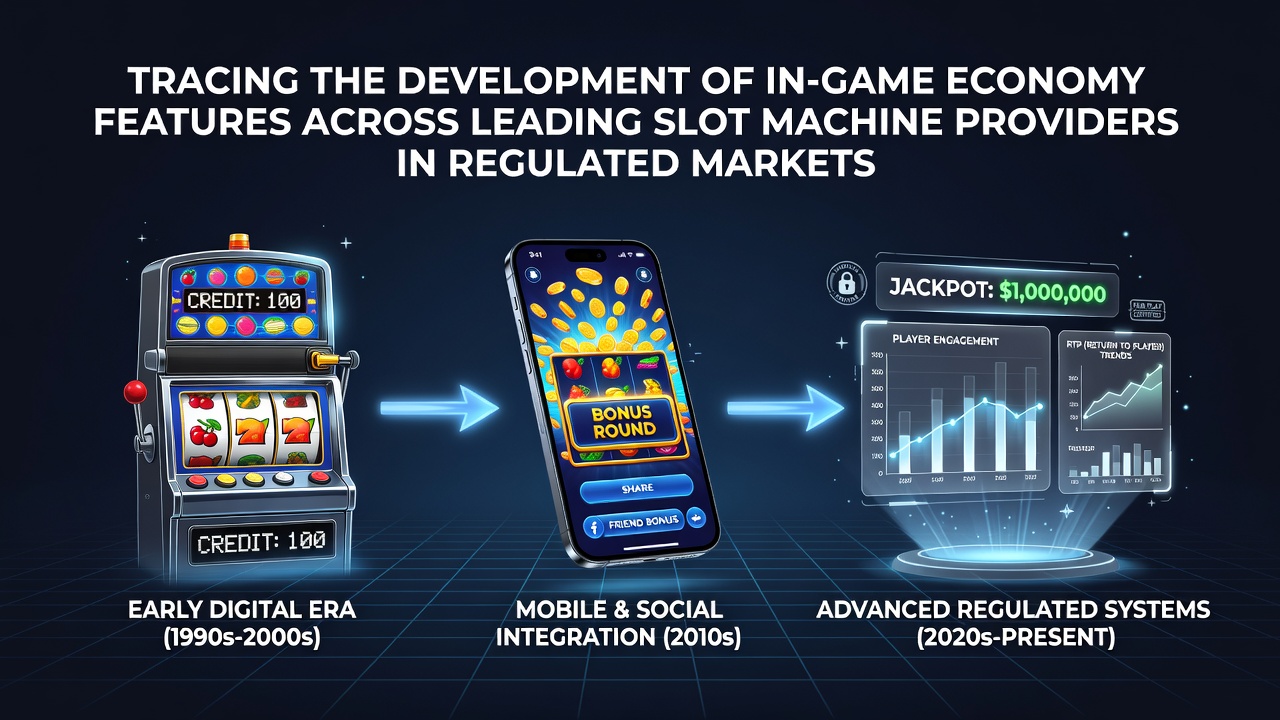
Slot machine economies began with simple coin mechanisms in the late 19th century, yet the shift to electronic systems in the 1960s introduced credit meters that tracked player balances across multiple spins and this foundation allowed providers to layer additional value mechanics over time. IGT launched the first video slots with persistent bonus counters in the 1980s, creating early forms of in-game accumulation that carried across sessions in regulated Nevada casinos while Aristocrat followed with multi-level progressive meters that distributed contributions across linked machines in Australian clubs and pubs.
Electronic Foundations and Credit-Based Systems
Regulated markets required transparent accounting from the outset so manufacturers embedded verifiable random number generators alongside economy displays that showed both current credits and accumulated progress toward features. Data from the Nevada Gaming Control Board shows that by 1995 over 80 percent of new slot installations included some form of internal meter tracking bonus eligibility and this practice spread to New Jersey and Mississippi as those jurisdictions legalized electronic gaming devices.
Playtech and Microgaming entered the online regulated space in the late 1990s with platforms that separated base game credits from promotional balances, allowing operators to apply distinct wagering requirements without altering core math models. Those distinctions became standard in markets such as the Isle of Man and Malta, where licensing frameworks demanded clear separation between player deposits and bonus funds.
Expansion of Layered Bonus Economies
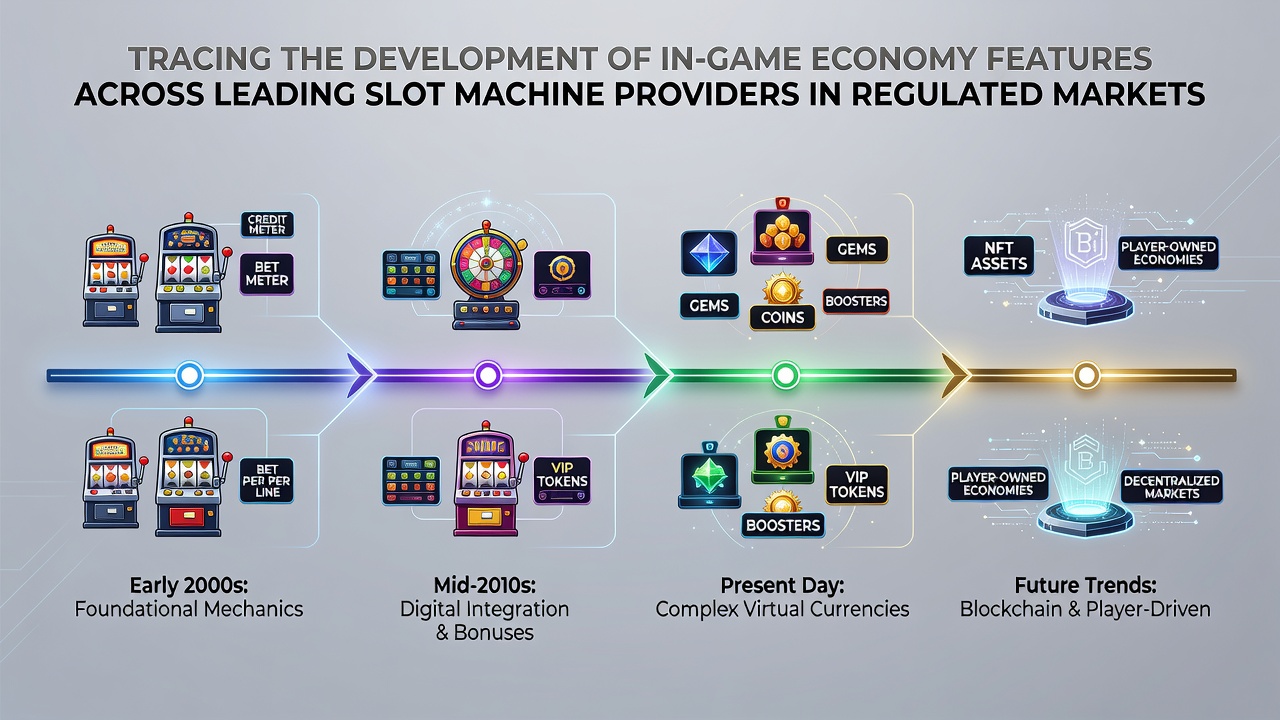
Leading developers introduced multi-stage economy layers during the 2000s. Aristocrat's Reel Power mechanic converted fixed paylines into variable credit allocations per spin, giving players control over stake distribution while the underlying RTP remained fixed and reported to regulators. NetEnt added avalanche systems that replaced winning symbols and incremented multipliers within the same paid spin, creating chained economy events that increased average feature frequency without changing base volatility.
By 2015, Scientific Games and Konami integrated loyalty point accrual directly into game interfaces in Pennsylvania and New Jersey online casinos so that every spin contributed to tier status visible on-screen. This integration reduced player friction and aligned with state requirements for responsible gaming disclosures that appear alongside economy meters.
Progressive and Shared Pool Mechanics
Multi-state progressive networks expanded economy reach beyond single venues. IGT's Megabucks linked machines across Nevada, New Jersey, and later Pennsylvania, pooling contributions into a central meter displayed on each terminal. Australian providers such as Ainsworth developed similar wide-area progressives for clubs under state gaming commissions, with contribution percentages published in regulatory returns.
Research from the University of Nevada, Reno gaming laboratory indicates that shared progressive pools increased average session length by 12 to 18 percent in monitored installations during the 2018-2022 period, while maintaining the same theoretical return percentages required by each jurisdiction.
Current Integrations in 2026
In July 2026 several providers rolled out configurable economy dashboards for operators in Michigan and Ontario that allow real-time adjustment of bonus accrual rates within pre-approved regulatory bands. These tools maintain audit trails that link every credit adjustment to game logs required by the Michigan Gaming Control Board and the Alcohol and Gaming Commission of Ontario.
Slot providers now embed optional bonus buy features that deduct fixed credit amounts in exchange for direct entry into feature rounds. Regulators in New Jersey require full disclosure of the cost-to-RTP ratio for each buy option, and similar rules took effect in Pennsylvania during the first quarter of 2026. Providers including Light & Wonder publish these ratios in game help screens so players see both the credit cost and the resulting change in expected return before confirming the purchase.
Regulatory Influence on Economy Design
Canadian and Australian regulators require that all economy features display their contribution to overall RTP in player-facing information panels. This transparency rule led developers to separate base game RTP from feature RTP in technical documentation submitted during certification. European markets outside the United Kingdom adopted comparable disclosure standards through the European Gaming and Betting Association guidelines, prompting providers to standardize meter labeling across titles.
Those who've studied certification records note that the number of distinct economy layers per game increased from an average of 2.3 in 2010 to 5.1 in 2025 across major supplier portfolios, while the total number of certified titles grew steadily under the same regulatory frameworks.
Conclusion
The progression of in-game economy features reflects continuous adaptation to regulatory reporting demands and operator requirements for player engagement tools. From early credit meters to today's configurable loyalty integrations and transparent bonus buy options, leading providers have aligned mechanical and digital systems with jurisdiction-specific standards. Data collected through 2026 shows sustained growth in the number and complexity of these features while preserving the verifiable return percentages mandated by regulatory bodies across North America, Australia, and Europe.