Tracing Skill-Based Mechanics Adoption Patterns Across Regulated Casino Game Libraries
Paul Schwarz · Jun 24, 2026
Tracing Skill-Based Mechanics Adoption Patterns Across Regulated Casino Game Libraries
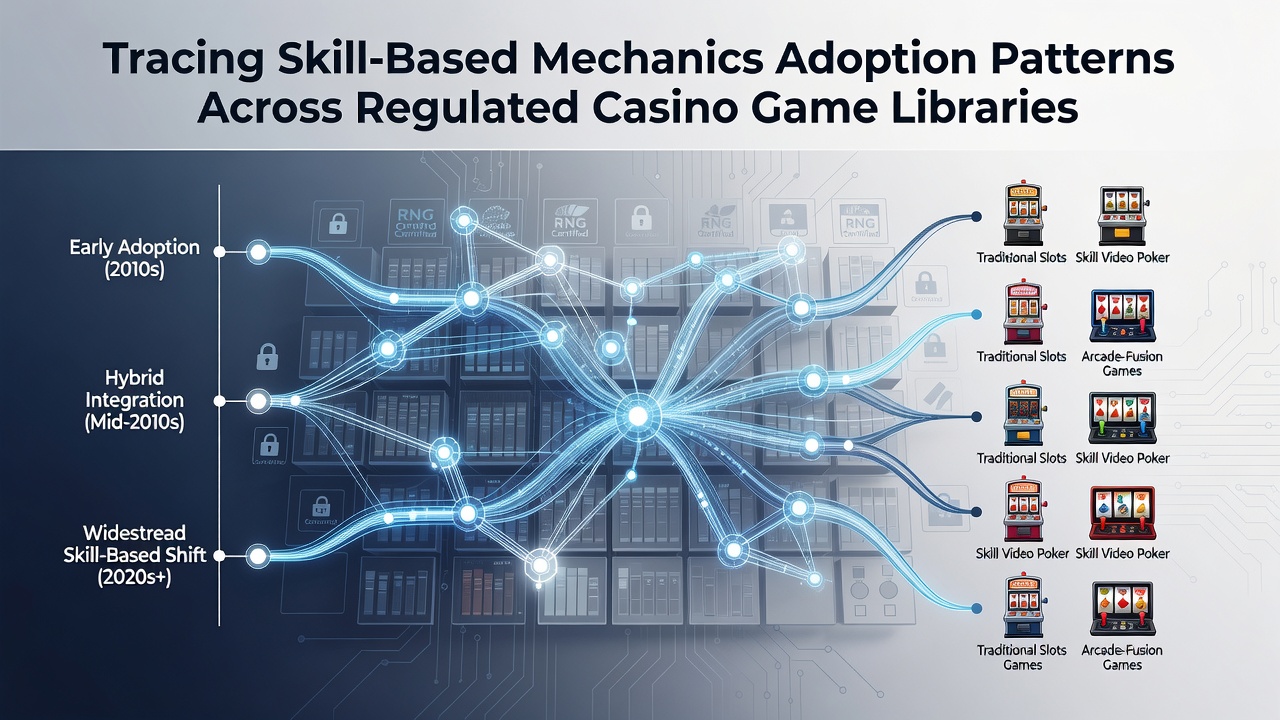
Regulated casino game libraries have shown steady incorporation of skill-based mechanics since the mid-2010s, with operators layering player-influenced elements onto traditional random number generator frameworks. These mechanics appear most often in video slots, table hybrids, and interactive bonus rounds where decision points alter payout probabilities within predefined mathematical bounds. Data from multiple licensing bodies indicate that adoption rates vary sharply by jurisdiction, reflecting differences in statutory definitions of chance versus skill.
Early Integration Trends in Established Markets
Nevada's gaming control framework permitted initial skill-based trials around 2015, and operators quickly expanded those experiments into broader library updates. By 2020 several Las Vegas Strip properties had added titles that rewarded timed inputs and pattern recognition during bonus sequences. Similar patterns emerged in New Jersey after teh 2013 online legalization wave, where developers introduced hybrid poker variants that carried over to mobile platforms. Those early moves established templates that other states later referenced when drafting their own rules for game approval.
Canadian provinces followed a parallel but slower trajectory. Ontario's Alcohol and Gaming Commission began reviewing skill-hybrid submissions in 2018, and the first approved titles reached player accounts in 2021. Provincial data logs show that these games represented under 4 percent of active titles through 2024, yet they accounted for disproportionate session lengths among users aged 25 to 40. Researchers tracking retention metrics noted that average play duration increased when skill elements required sequential choices rather than single-button presses.
Geographic Spread and Library Composition Shifts
By early 2026 the pattern of adoption had spread across additional U.S. states that legalized online or retail offerings after 2022. Michigan and Pennsylvania both recorded double-digit growth in skill-mechanic approvals between 2024 and 2025, according to quarterly reports issued by their respective control boards. In contrast, markets with stricter chance-only statutes, such as certain Australian state frameworks, maintained near-zero inclusion rates for anything beyond traditional video poker. The contrast highlights how statutory language directly shapes library diversity.
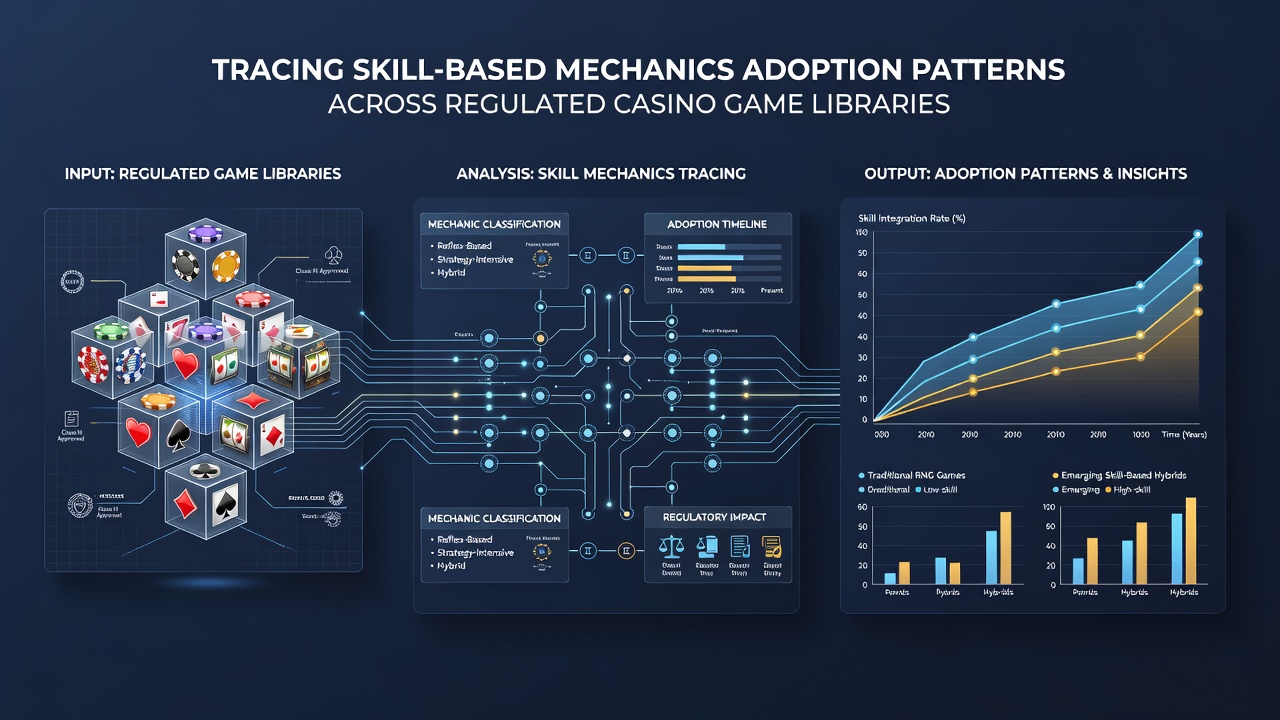
Library audits conducted in June 2026 reveal that roughly 12 percent of regulated mobile titles in the three leading North American markets now contain at least one measurable skill component. The figure rises to 19 percent when counting only new releases approved after January 2025. Providers have concentrated these features inside branded sequels and branded crossover products, allowing operators to refresh existing libraries without overhauling entire catalogs.
Regulatory and Technical Enablers
Approval pathways have grown more standardized since 2023. Testing laboratories now apply consistent evaluation protocols that measure both return-to-player percentages and the statistical impact of player decisions. Regulators in multiple jurisdictions require submitted games to demonstrate that skill cannot override the house edge beyond preset thresholds, a safeguard that has eased legislative concerns. This technical clarity accelerated submission volumes, particularly from mid-sized studios that previously lacked resources for multi-jurisdiction compliance.
Payment and geolocation systems have also adapted. Integration with existing wallet frameworks occurs through modular APIs that log skill-triggered bonus triggers separately from base-game outcomes. Such separation simplifies audit trails and satisfies the multi-state reporting requirements that emerged after the 2024 federal review of interstate gaming compacts.
Observed Patterns in Player Engagement Data
Engagement analytics collected across approved platforms show distinct clustering. Titles with moderate skill ceilings, such as pattern-matching bonus wheels, achieve broader demographic reach than high-difficulty strategy hybrids. Session-frequency reports indicate that users return more often when skill elements reset daily or tie into loyalty tier progression, patterns documented in aggregated operator filings submitted to state regulators. These behavioral signals have prompted several library managers to prioritize mid-complexity mechanics during the 2026 content planning cycle.
Conclusion
Tracing adoption across regulated libraries demonstrates that skill-based mechanics follow jurisdiction-specific regulatory gateways rather than uniform global trends. North American markets continue to lead in approved volume, while other regions maintain narrower definitions that limit inclusion. Continued standardization of testing protocols and clearer statutory language are expected to shape the next phase of library composition through at least 2028.