How Regional Tax Variations Influence Net Winnings Calculations in Licensed Online Gaming
Logan Schulz · Aug 12, 2026
How Regional Tax Variations Influence Net Winnings Calculations in Licensed Online Gaming
Tax structures in licensed online gaming create distinct calculation paths for net winnings because jurisdictions apply different withholding rates, reporting thresholds, and deduction rules that directly reduce or preserve player payouts. Participants in these platforms encounter gross win figures that shrink once regional authorities extract their portions, and the process starts with determining whether winnings qualify as taxable income or remain exempt under local statutes. Data from multiple regulatory environments shows that a single jackpot in one area might lose 30 percent immediately while the same amount in another jurisdiction stays intact until annual filings occur.
North American Calculation Methods
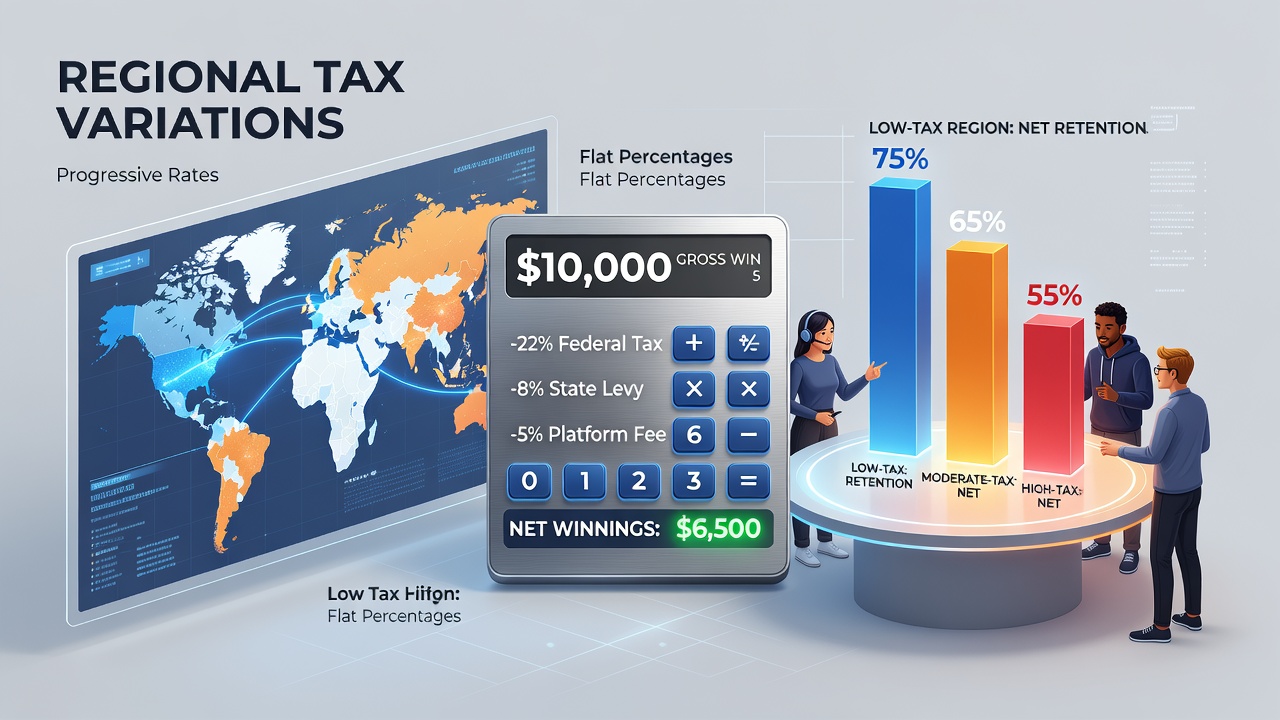
Operators licensed in the United States apply federal withholding at 24 percent on winnings above certain thresholds when participants fail to provide tax identification, while individual states layer additional levies that range from zero in some locations to over 10 percent in others. Players in New Jersey or Pennsylvania therefore see their net amounts reduced by combined federal and state obligations before funds reach their accounts, whereas those accessing platforms regulated in Canada typically retain full gross winnings because federal and provincial rules treat most gambling proceeds as non-taxable. The Canada Revenue Agency maintains this exemption for lottery and casino payouts, which means net calculations remain straightforward and equal to gross figures in those markets. Observers note that cross-border participants must still reconcile these differences when moving funds between accounts registered under varying licenses, since a win earned on a US-facing site carries reporting requirements that do not apply to the same player on a Canadian-facing platform.
European and Asia-Pacific Variations
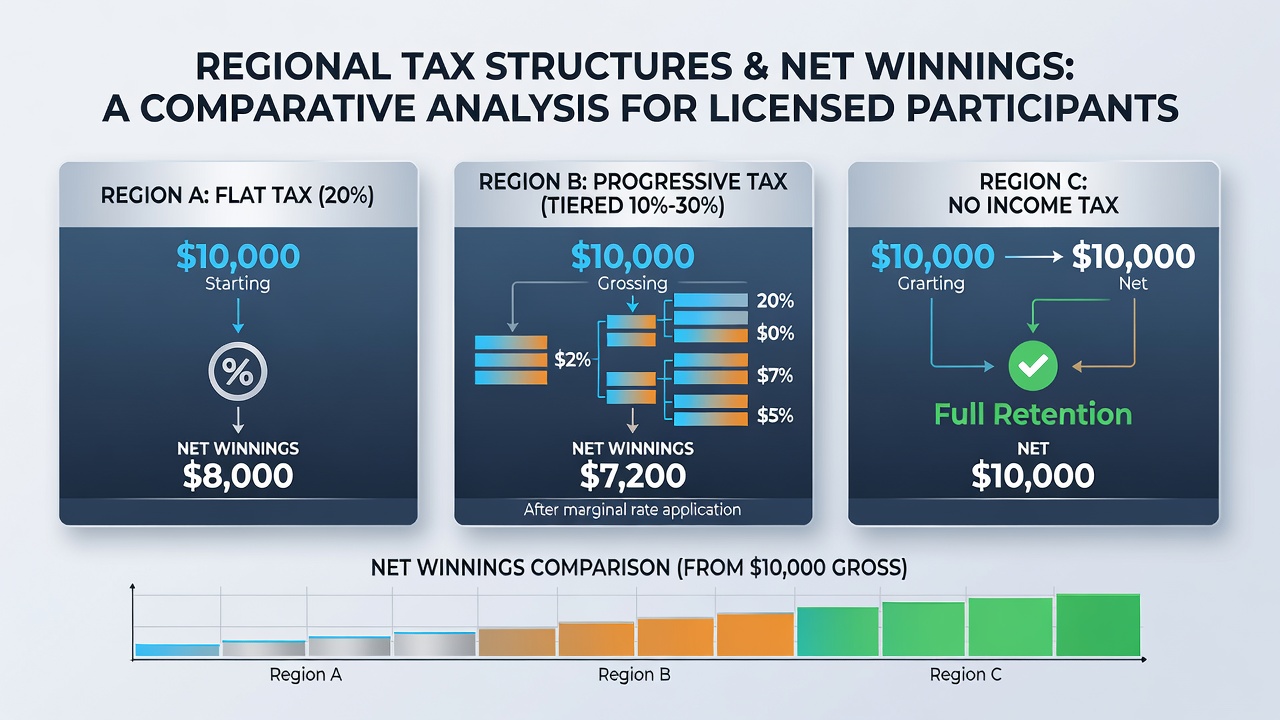
European jurisdictions demonstrate further divergence because Malta and several other licensing authorities impose operator-level taxes that indirectly affect player nets through adjusted payout structures, while Germany applies a 5 percent tax directly on stakes that reduces effective winnings before distribution. Australian rules require operators to withhold tax on certain high-value prizes, yet the Australian Taxation Office allows some deductions for gambling losses that can lower the final taxable base when players file annual returns. Research indicates that these layered obligations create complex net calculations involving multiple steps: first subtracting any immediate withholdings, then adjusting for allowable loss offsets, and finally accounting for currency conversion fees when cross-border transfers occur. As of August 2026 several Australian states updated their reporting thresholds upward, which reduced the frequency of automatic withholdings for mid-tier wins and allowed more participants to calculate nets independently during tax season.
Reporting Requirements and Platform Adjustments
Licensed sites integrate automated systems that apply region-specific formulas at the point of withdrawal, so a participant selecting a jurisdiction during registration triggers the correct withholding logic before any funds move. These systems reference current tax tables and update automatically when authorities revise rates, which prevents manual errors but also locks players into the tax outcome tied to their chosen licensing region. Those who switch accounts across borders discover that previously calculated nets can shift substantially because the new platform applies its home jurisdiction rules rather than carrying over prior adjustments. Industry reports highlight cases where players in multi-state networks encountered different net outcomes on identical game results simply because one account fell under one state's withholding schedule and another under a neighboring state's schedule.
Practical Examples Across Jurisdictions
Consider a $10,000 win on a licensed slot platform: in a high-tax US state the immediate federal and state withholdings might total $3,400, leaving a net of $6,600 before any further personal filings, whereas the same win in a Canadian-regulated environment delivers the full $10,000 with no automatic deduction. In Australia the same amount could trigger a 20 percent withholding on the excess above the annual threshold, yet subsequent loss deductions might recover several hundred dollars when the participant submits a return. European operators often embed their tax obligations into the overall return-to-player percentage, which means the displayed net already reflects the jurisdiction's extraction and requires no separate player calculation step. These differences compound when currency fluctuations enter the equation, because exchange rates applied at withdrawal time can either amplify or diminish the final amount that lands in a participant's account after all regional taxes clear.
Conclusion
Regional tax structures therefore dictate precise sequences of subtractions, adjustments, and filings that determine what participants ultimately keep from their licensed online gaming activity. Platforms maintain compliance by embedding these rules into withdrawal processes, while players navigate varying obligations depending on where their accounts are registered and which authorities claim jurisdiction over the winnings. Data shows that understanding these regional differences allows participants to anticipate net outcomes before placing wagers, although actual calculations remain the responsibility of each licensed operator under its specific regulatory framework.