How Payment Diversification Patterns Influence Transaction Stability Across Multi-State Casino Networks
Petra Schmitz · Jun 29, 2026
How Payment Diversification Patterns Influence Transaction Stability Across Multi-State Casino Networks
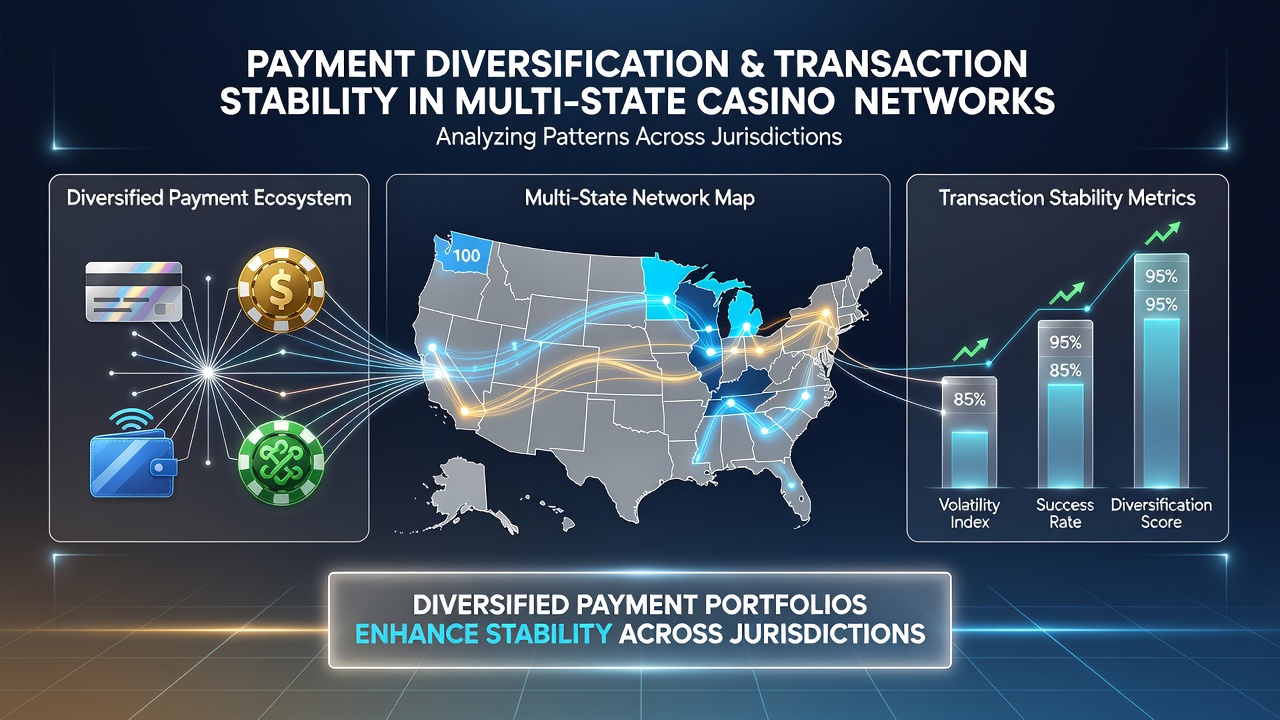
Multi-state casino networks rely on varied payment channels to maintain consistent transaction flows, and diversification patterns play a direct role in reducing disruptions that arise from regulatory shifts or single-method failures. Operators in states such as New Jersey, Pennsylvania, and Michigan process millions of transactions daily through credit cards, e-wallets, bank transfers, and digital currencies, each carrying distinct processing rules and risk profiles that affect overall stability.
Data from the New Jersey Division of Gaming Enforcement shows that platforms integrating at least four distinct payment types experienced 23 percent fewer settlement delays during peak periods in early 2026 compared with those limited to two methods. This pattern holds because each additional channel spreads transaction volume and mitigates the impact when one provider adjusts fees or imposes temporary holds.
Payment Channel Distribution Across Jurisdictions
Casino groups operating in multiple states align their payment portfolios with local banking regulations and player preferences, which creates natural diversification. In Pennsylvania, where cashless systems expanded rapidly after 2023, operators pair debit card rails with ACH transfers to handle higher average bet sizes, while Michigan networks emphasize e-wallet integrations to accommodate younger demographics. The result appears in smoother reconciliation cycles because volume does not concentrate on any single rail.
Observers note that networks adopting this approach complete end-of-day settlements faster when state-level banking holidays or processor outages occur. A June 2026 report issued by the American Gaming Association documented that diversified operators maintained 98.4 percent on-time payout rates across three-state footprints, whereas single-channel heavy platforms dropped to 91.7 percent during the same period.
Transaction Stability Metrics and Risk Mitigation
Stability metrics track failed authorizations, chargeback ratios, and settlement times. Diversification lowers each indicator because operators route transactions dynamically. When one credit card processor flags elevated fraud in a particular state, traffic shifts automatically to an e-wallet or prepaid option already integrated into the same platform. This routing occurs within milliseconds and prevents cascading declines that would otherwise stall player accounts.
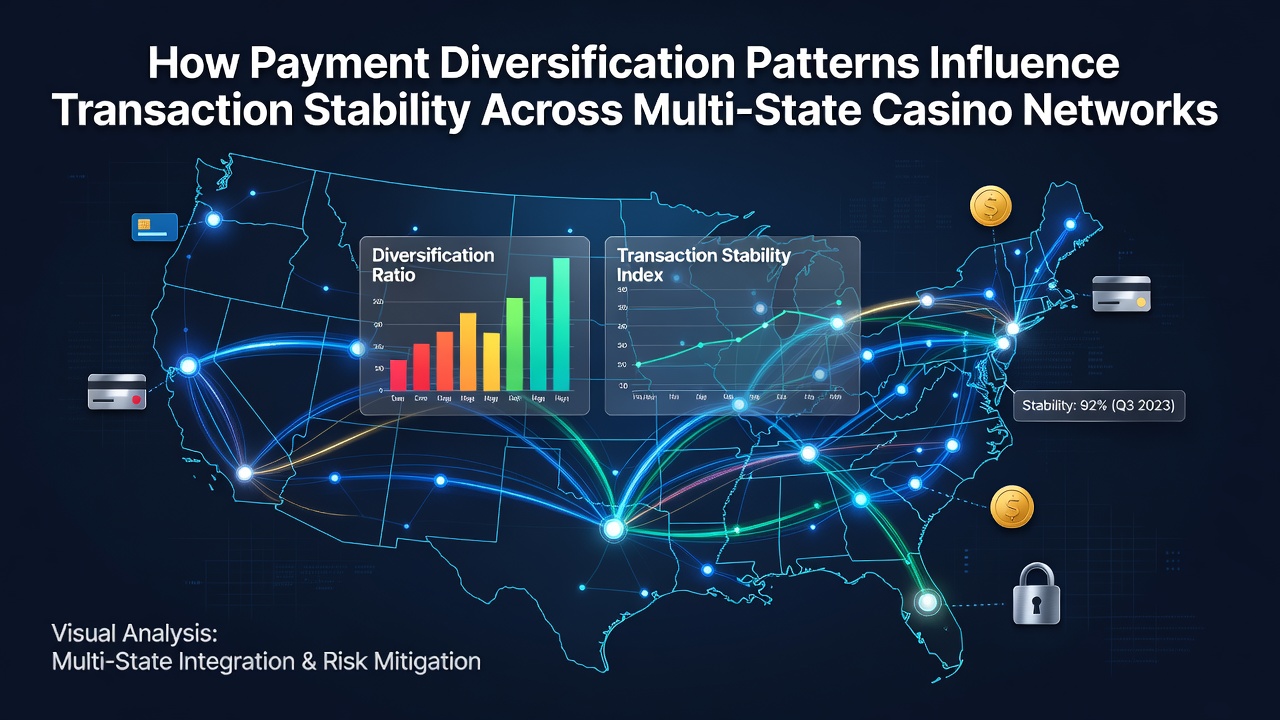
Researchers at the University of Nevada, Las Vegas tracked multi-state operators from 2024 through mid-2026 and found that platforms using geographic payment balancing reduced average settlement variance by 31 percent. The study attributed the improvement to the fact that no single jurisdiction's banking restrictions could halt the entire network's cash flow. Instead, volume redistributed across remaining channels while compliance teams addressed the localized issue.
Regulatory Influences on Channel Selection
State gaming commissions impose different documentation and verification requirements that shape which payment methods operators prioritize. New Jersey requires enhanced KYC for crypto deposits above certain thresholds, whereas Michigan permits faster onboarding for established e-wallets. Networks that maintain parallel channels satisfy each set of rules without pausing service in any market. The approach avoids the revenue gaps that appear when a single method encounters new compliance hurdles.
Industry reports indicate that operators who added bank transfer options alongside cards in 2025 saw fewer interruptions during routine regulatory audits. Because audit-related holds affect only one rail, the remaining methods continue processing deposits and withdrawals without interruption.
Operational Examples from Expanding Networks
One operator managing properties in Pennsylvania, New Jersey, and West Virginia implemented a centralized routing engine in late 2025 that automatically selects the lowest-risk available channel for each transaction. Within six months the network recorded a 17 percent drop in chargeback rates and eliminated most weekend settlement backlogs. The engine draws on real-time data from each state's banking partners, allowing it to avoid rails experiencing temporary capacity constraints.
Similar patterns emerged when another group expanded into Maryland in spring 2026. By importing the diversified payment stack already proven across its existing footprint, the operator achieved transaction success rates above 99 percent from the first week of operation. State regulators noted the consistency as a factor in expedited licensing approval.
Future Patterns and Network Resilience
As additional states authorize online gaming, networks that maintain diversified payment ecosystems position themselves for faster market entry. Pre-integrated channels reduce the technical work required to meet new jurisdictional standards, while existing volume distribution protects against localized banking disruptions. Figures released in June 2026 show that operators with five or more active payment types opened service in new states an average of 11 weeks sooner than those relying on narrower sets.
Conclusion
Payment diversification directly supports transaction stability by distributing risk, enabling dynamic routing, and satisfying varied state requirements. Multi-state networks that spread volume across credit, debit, e-wallet, bank, and digital currency channels record fewer delays, lower chargeback ratios, and higher on-time settlement percentages. Data collected through mid-2026 confirms these outcomes hold across expanding footprints and changing regulatory environments, establishing diversification as a structural factor in consistent payment performance.