Edge Computing Nodes Streamline Remote Table Game Streams Across Licensed Networks
Leon Schulz · Jul 29, 2026
Edge Computing Nodes Streamline Remote Table Game Streams Across Licensed Networks
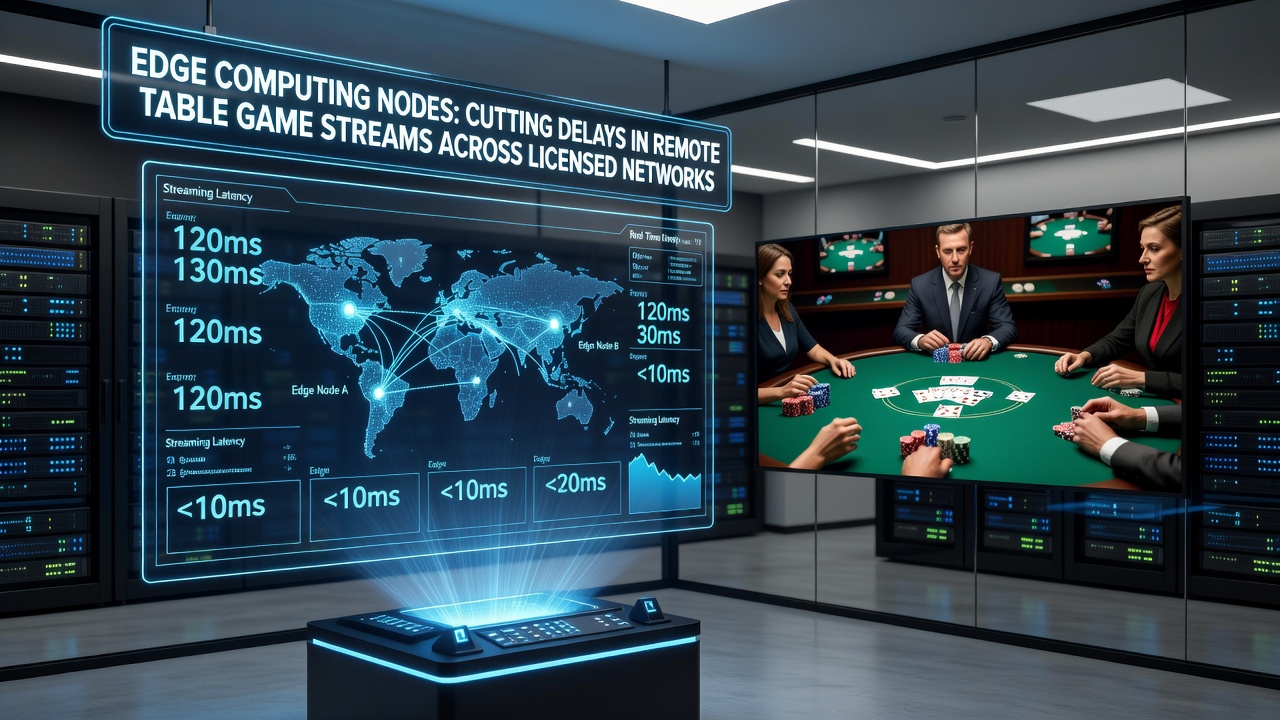
Edge computing nodes sit physically closer to end users and licensed gaming operators which allows video feeds from live dealer tables along with player decisions to travel shorter distances before processing occurs and this setup cuts transmission delays that once plagued remote table game streams on traditional cloud systems.
The Mechanics Behind Reduced Latency
Traditional cloud architectures route all data through distant centralized servers creating round-trip times that often exceed 100 milliseconds while edge nodes handle video encoding, game logic validation and input synchronization at regional facilities which brings average delays down to 20-40 milliseconds according to deployment data from multiple operators. Researchers note that these nodes run on localized hardware optimized for real-time tasks so they bypass congested backbone networks and maintain consistent performance even during peak evening hours when thousands of players join simultaneous blackjack or roulette sessions.
Regulatory Demands in Licensed Environments
Licensed networks must meet strict standards for fairness, security and auditability and edge computing supports these requirements by keeping sensitive player data and game outcomes within approved geographic boundaries while still delivering the low-latency experience players expect. As of July 2026 several jurisdictions have updated their technical guidelines to explicitly recognize edge node architectures provided operators maintain full logging and encryption protocols that satisfy oversight bodies. Observers point out that the same proximity advantage also helps operators comply with geofencing rules because traffic never leaves the licensed region before reaching the player device.
Practical Deployments and Measured Outcomes
Operators in North American markets began rolling out edge nodes in late 2024 and by mid-2026 reported latency reductions of 65-80 percent on live dealer streams compared with prior cloud-only setups. Data collected across these networks shows that player drop-off rates during critical decision moments decreased noticeably once round-trip times fell below 50 milliseconds which aligns with findings from industry testing labs. Meanwhile Australian regulators have examined similar implementations and documented stable frame rates above 60 fps even for players connecting from remote areas where traditional routing previously introduced jitter and packet loss.

One study released by the University of Nevada Reno examined traffic patterns from multiple Nevada-licensed sites and confirmed that edge processing preserved the integrity of random number generation and card shuffling sequences while accelerating the return of results to players. The same report highlighted that operators achieved these gains without increasing hardware costs at the central data center because edge nodes absorb the bulk of video transcoding workloads.
Integration Challenges and Solutions
Deploying edge infrastructure requires coordination between gaming software providers, network carriers and regulatory auditors yet operators who completed the transition report that standardized APIs and containerized game engines eased the migration. Those who studied the rollout note that synchronization between multiple edge sites becomes critical when a player switches tables or when a live dealer session moves across regional boundaries and the solution involves continuous heartbeat signals plus redundant failover paths that activate within milliseconds. Data indicates these safeguards keep service interruptions below the thresholds set by most licensing agreements.
Future Scaling Across Multi-Jurisdictional Networks
Expansion plans announced for late 2026 and 2027 focus on adding edge capacity in secondary markets so that live table streams remain responsive even as player bases grow in new regions. Industry groups such as the Nevada Gaming Control Board have begun reviewing proposals that would allow shared edge facilities among licensed operators provided each participant maintains separate audit trails. Parallel discussions in other jurisdictions explore how edge nodes could support emerging features like multi-camera dealer views or instant replay functions without reintroducing delay.
Conclusion
Edge computing nodes continue to reshape how remote table game streams operate inside licensed networks by moving processing power closer to players and licensed endpoints which delivers measurable reductions in latency while supporting regulatory compliance. Deployment data through July 2026 shows consistent improvements in stream stability and player retention metrics across varied geographic markets and further scaling appears likely as technical standards evolve. The approach demonstrates that infrastructure choices directly influence both technical performance and regulatory alignment in digital gaming environments.